

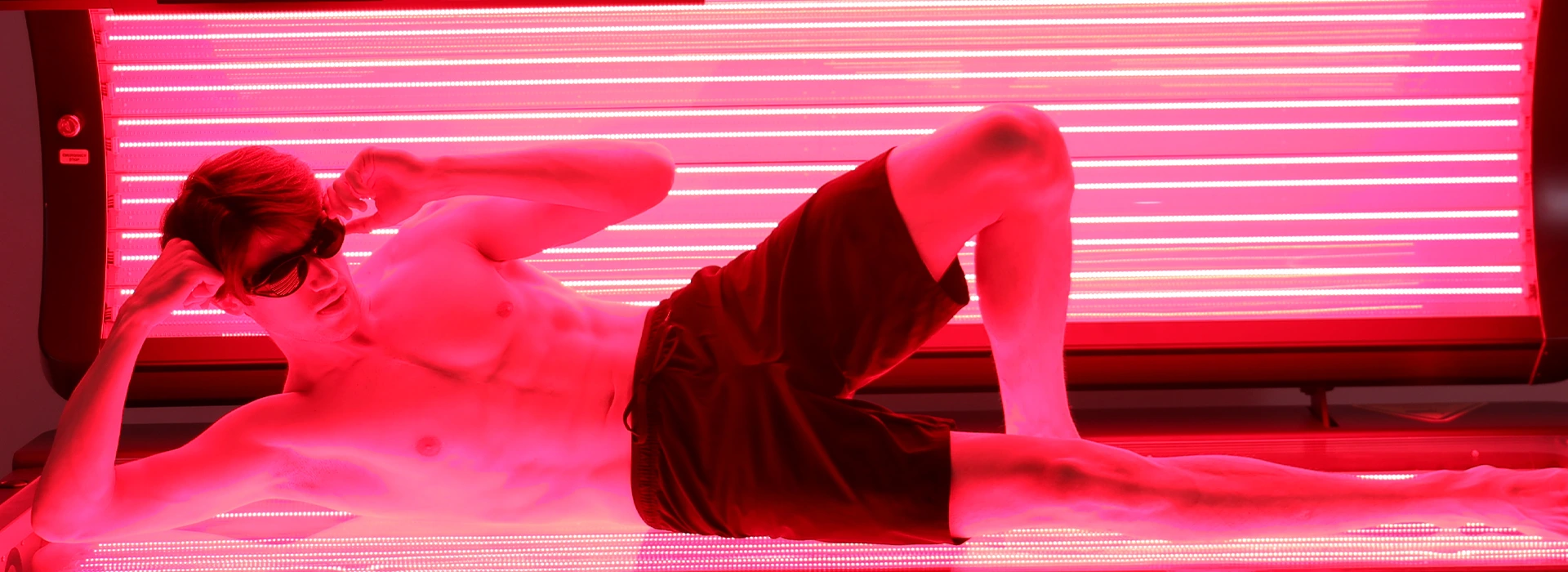
For professionals, clinic owners, and highly experienced biohackers, the question regarding full-body Photobiomodulation (PBM) therapy is rarely about if it works, but rather, how to optimize its safety and efficacy. You understand that the clinical viability of any tool hinges on its fundamental safety profile and the precision of its application.
As the industry leader in high-irradiance PBM solutions, Magique Power recognizes that the due diligence for any substantial wellness investment begins with a rigorous examination of the technology’s inherent safety, dosing considerations, and contraindications. We’ve compiled this detailed analysis to address the safety of modern, full-body red light bed systems from the perspective of an advanced user.

Deconstructing Safety: The Science Behind the Red Light Bed
The foundation of red light therapy (or Photobiomodulation, PBM) is its non-ionizing nature. Unlike tanning beds or other systems utilizing Ultraviolet (UV) light, red light beds employ specific wavelengths (typically 630nm, 660nm, and Near-Infrared wavelengths like 810nm, 850nm, and 940nm) that are outside the UV spectrum.
- No UV, No Thermal Damage:
The primary concern associated with traditional light exposure—skin cancer risk, cellular damage, and burning—is entirely absent from quality PBM devices. Red and Near-Infrared (NIR) light energy is absorbed by the cytochrome c oxidase enzyme within the cell’s mitochondria. This triggers a physiological cascade, enhancing ATP production and optimizing cellular function without causing thermal damage or relying on UV radiation. The mild, temporary warmth often felt is generally a benign physiological response, not a burn risk, provided the device is used within manufacturer guidelines.
- Minimal to No Side Effects:
The safety record of PBM, when properly administered, is robustly positive. Clinical literature confirms that side effects are rare and usually mild, including temporary redness, slight dryness, or minor warmth at the treatment site. In rare instances, some individuals report temporary headaches or eye strain, which underscores the necessity of high-quality protective eyewear—a non-negotiable safety protocol during any full-body session.
- The Critical Role of Precision Dosing (J/cm²):
For the experienced practitioner, safety is inextricably linked to efficacy, which is governed by the dosage (Joules per square centimeter, or J/cm²). Overdosing does not necessarily pose a dangerous health risk in the short term, but it can lead to the ‘biphasic dose response,’ diminishing the desired biological outcome. Conversely, underdosing leads to insufficient cellular stimulation. This advanced understanding of the optimal irradiance window is why commercial-grade systems, like the Magique Power LUM-R5500 Full Body Red Light Therapy Bed, are designed for extreme precision, allowing you to fine-tune the parameters necessary to remain in the therapeutic window.
Mitigating Risk: Contraindications for the Advanced Led Light Therapy Bed
True safety management requires proactively identifying contraindications. For commercial environments utilizing high-intensity, whole-body PBM, adherence to strict screening protocols is essential. We advise advanced users and clinic operators to exercise caution in the following specific scenarios:
Photosensitizing Medications: This is the most critical contraindication. Individuals taking medications known to increase light sensitivity—including certain antibiotics (like tetracycline), chemotherapy drugs, retinoids, or certain antipsychotics—should be excluded from PBM therapy unless cleared by a physician.
Active Malignancy: While oncologic safety data continues to evolve and some studies suggest PBM does not promote neoplastic cell proliferation, it is the established best practice to avoid applying PBM over areas of active cancer or suspicious lesions without explicit guidance from an oncologist.
Photosensitive Conditions: Autoimmune conditions that trigger photosensitivity, such as Lupus Erythematosus or Porphyria, require avoidance or extreme caution, as exposure to any visible light can sometimes trigger flare-ups.
Pregnancy: Due to the understandable lack of long-term safety data for both the fetus and the mother, PBM should be avoided entirely during pregnancy as a precautionary measure.
Seizure Disorders (Epilepsy): While modern, high-quality PBM systems are designed to be flicker-free, any history of photosensitive epilepsy necessitates physician consultation before use.
Magique Power: Precision Engineering for Guaranteed Safety and Performance
The safety of a PBM session is ultimately dictated by the quality and engineering of the equipment. For the high-volume clinic or the dedicated user demanding optimal results, a high-specification system is not just a luxury—it is a safety and efficacy mandate.
The Magique Power R-5500 led light therapy bed systems are engineered specifically for this advanced user profile. As our flagship full-body PBM solution, the R-5500 offer the critical features required for professional, repeatable, and safe protocols:
1.Extreme Irradiance and Coverage: With up to 43,200 high-power LEDs and a total power draw of 6,000 Watts, the R-5500 bed delivers a powerful and consistent irradiance of 129 mW/cm². This high output ensures cellular saturation (dosing) can be achieved in shorter, more efficient session times, reducing potential overexposure risks associated with lengthy sessions in underpowered units. The 360° coverage guarantees uniform dosing across the entire body.
2.Multispectral Wavelength Control: Experienced PBM users understand the necessity of targeted wavelengths. The R-5500 system feature five independently adjustable, clinically relevant wavelengths (633nm, 660nm, 810nm, 850nm, 940nm), allowing you to precisely match the wavelength protocol to the therapeutic goal (e.g., skin rejuvenation versus deep muscle recovery).
3.Advanced Pulsing Capabilities: True mastery of PBM involves modulating cellular response via pulsing frequency. The Magique Power R-5500 system offers an adjustable pulsing frequency range of 1–10,000 Hz. This manual mode capability is vital for professionals implementing advanced research protocols that require non-Continuous Wave (CW) administration, adding another layer of precise control over the cellular response.
4.Integrated Safety and Cooling: The intelligent dual control and self-circulating cooling systems ensure the device maintains consistent LED temperature, protecting the longevity of the diodes and, most importantly, ensuring patient comfort and preventing the risks of accidental thermal buildup, even during extended use.
Conclusion
When sourced from a reputable, high-spec manufacturer, led light therapy bed technology is overwhelmingly safe, non-invasive, and effective. Its low-risk profile stems from the fundamental science of Photobiomodulation, which utilizes non-ionizing, non-thermal light energy.
For the professional seeking to deliver maximum results with uncompromising safety, the key is the precision of the device. The sophisticated engineering and high-output specifications of the Magique Power full-body system provide the control necessary to implement optimized, safe, and effective PBM protocols every time.
Choosing a commercial-grade solution like the Magique Power R-5500 system is choosing confidence: the confidence that your equipment adheres to the highest standards of safety and the precision required to truly master the art of Photobiomodulation.
