

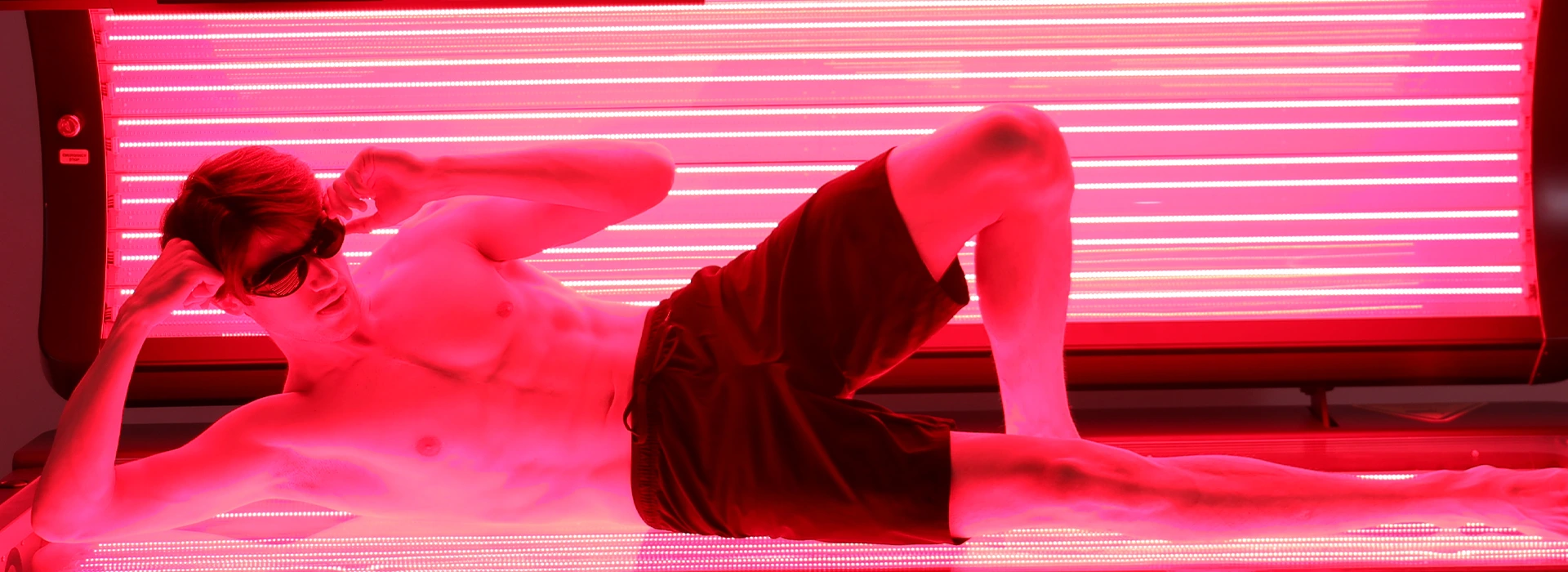
In the dynamic world of wellness and clinical recovery, Photobiomodulation (PBM) therapy—commonly known as red light therapy—has transitioned from an experimental modality to a cornerstone of anti-inflammatory protocols. For experienced practitioners and sophisticated buyers, the core question isn’t whether PBM works, but rather: How long does it take for red light to reduce inflammation?
The timeline for efficacy is not static; it is a direct function of the light’s dosage, the chronicity of the inflammation, and the quality of the device deployed. To provide an accurate answer, we must move beyond anecdotal claims and analyze the cellular mechanisms and clinical kinetics that govern this response.
The Core Mechanism: How Photons Modulate Inflammation
The rapid anti-inflammatory effects observed with PBM are rooted in the interaction of specific red (600–700 nm) and near-infrared (NIR, 700–1000 nm) photons with mitochondrial chromophores.
The most widely accepted primary photoacceptor is Cytochrome c Oxidase (Cox), the terminal enzyme in the mitochondrial electron transport chain. When cells are under metabolic stress, nitric oxide (NO) binds to Cox, inhibiting cellular respiration and leading to reduced energy (ATP) production—a key driver of inflammation.
When exposed to red and NIR light, the absorbed photons initiate a cascade:
1.NO Dissociation: The light energy dissociates the inhibitory nitric oxide from Cox.
2.ATP Production: This allows oxygen to bind normally, rapidly restoring mitochondrial respiration and significantly boosting Adenosine Triphosphate (ATP) production.
3.Redox Signaling: This surge in cellular energy triggers secondary signaling pathways.
Crucially, PBM also exerts a powerful immunomodulatory effect by targeting inflammatory transcription factors. The light energy has been shown to modulate the NF-kB pathway, a central regulator in the inflammatory cascade. In tissues with excessive, chronic inflammation, PBM suppresses NF-kB activation, which in turn reduces the downstream production of pro-inflammatory cytokines such as Tumor Necrosis Factor-alpha (TNF-α) and Interleukin-1 beta (IL-1β), while simultaneously promoting anti-inflammatory mediators like IL-10. This re-tuning of the cellular environment is what fundamentally drives long-term healing.
The Crucial Variables: Why “Dosage” Determines Timeline
Unlike consumer-grade devices, high-specification equipment requires experienced users to understand the critical parameters that dictate results:
- Wavelength Precision:The optimal wavelengths—particularly 660 nm (Red) for surface issues and 850 nm (NIR) for deeper tissue penetration—must be delivered with minimal variance.
- Irradiance (Power Density):Measured in mW/cm², this is perhaps the single most important factor. High irradiance ensures that a therapeutic dose reaches deep target tissues in a clinically viable treatment time (e.g., 10–15 minutes). Low-irradiance devices may require prohibitively long sessions to achieve the same result, negatively impacting patient throughput in a commercial setting.
- The Biphasic Dose Response:PBM adheres to the Arndt-Schulz law, meaning that too little energy results in no effect, but too much energy can lead to inhibitory or negative effects. This is why devices must allow for precise, verifiable dosing tailored to the specific indication.
Acute vs. Chronic: Realistic Timelines for Inflammation Reduction
The question of “how long” depends entirely on the type and stage of inflammation being treated:
Inflammatory State | Treatment Goal & Timeline | Mechanism of Action |
Acute Inflammation (e.g., Post-Exercise DOMS, Immediate Trauma) | Pain relief and accelerated recovery within 24 to 96 hours. | Immediate ATP boost and rapid NO release leading to localized vasodilation and analgesia. Clinical studies often show markers of muscle damage (like creatine kinase) reduced within this timeframe. |
Sub-Acute Inflammation (e.g., Mild Strain, Post-Surgical Edema) | Significant reduction in pain and swelling within 1 to 2 weeks (3–5 sessions). | Activation of lymphatic drainage and initial suppression of pro-inflammatory cytokines. |
Chronic Inflammation (e.g., Arthritis, Chronic Pain Syndromes, Neuropathy) | Structural and lasting symptom improvement requiring 4 to 12 weeks (consistent, multi-weekly sessions). | Requires long-term modulation of gene expression, macrophage polarization (M1 to M2 shift), and sustained suppression of the NF-kB pathway to fundamentally remodel the tissue environment. |
While immediate analgesic effects can be felt after a single, properly dosed session, reducing persistent, deep-seated inflammation is a cellular process that necessitates consistent therapy over several weeks.
Best Red Light Therapy Device for Inflammation: Precision and Power by Magique Power
For clinical environments where predictable results and high efficiency are non-negotiable, the choice of equipment is paramount. Utilizing a best red light therapy bed designed for professional use, such as those manufactured by Magique Power, allows practitioners to master the dosage and timing variables.
Magique Power full-body light therapy beds are engineered for high-volume, professional application. Key specifications that directly address the challenge of reducing inflammation include:
- Precision Wavelength Delivery:Incorporating a scientifically optimized array of wavelengths (including 660 nm Red and 850 nm NIR) with minimal ±3 nm tolerance, ensured by premium Epistar LED chips and rigorous in-house quality control.
- Superior Irradiance:The high-density LED configurations, some exceeding 43,200 LEDs, deliver the necessary power (high mW/cm²) across the entire body. This power is essential for achieving deep tissue penetration and the required therapeutic dose in a short, efficient treatment window.
- Hybrid Energy Field Technology:Many Magique Power devices integrate technology such as Pulsed Electromagnetic Field (PEMF) energy modulation. This combination creates a synergistic effect, enhancing the body’s innate cellular repair mechanisms and potentially accelerating the anti-inflammatory response kinetics.
By providing ISO 13485 certified quality and focusing on reproducible dosing metrics, Magique Power offers what is truly the best red light therapy device for inflammation because it provides the controlled power and precision necessary for experienced professionals to achieve reliable clinical outcomes across acute and chronic conditions.
Ultimately, while the anti-inflammatory process begins at the molecular level within minutes of treatment, the total time required for the patient to perceive significant, lasting relief is determined by two factors: the chronicity of the condition and the quality of the photon energy being delivered. Professionals must calibrate their expectations to the scientific data, relying on powerful, precise tools to meet those goals.
