

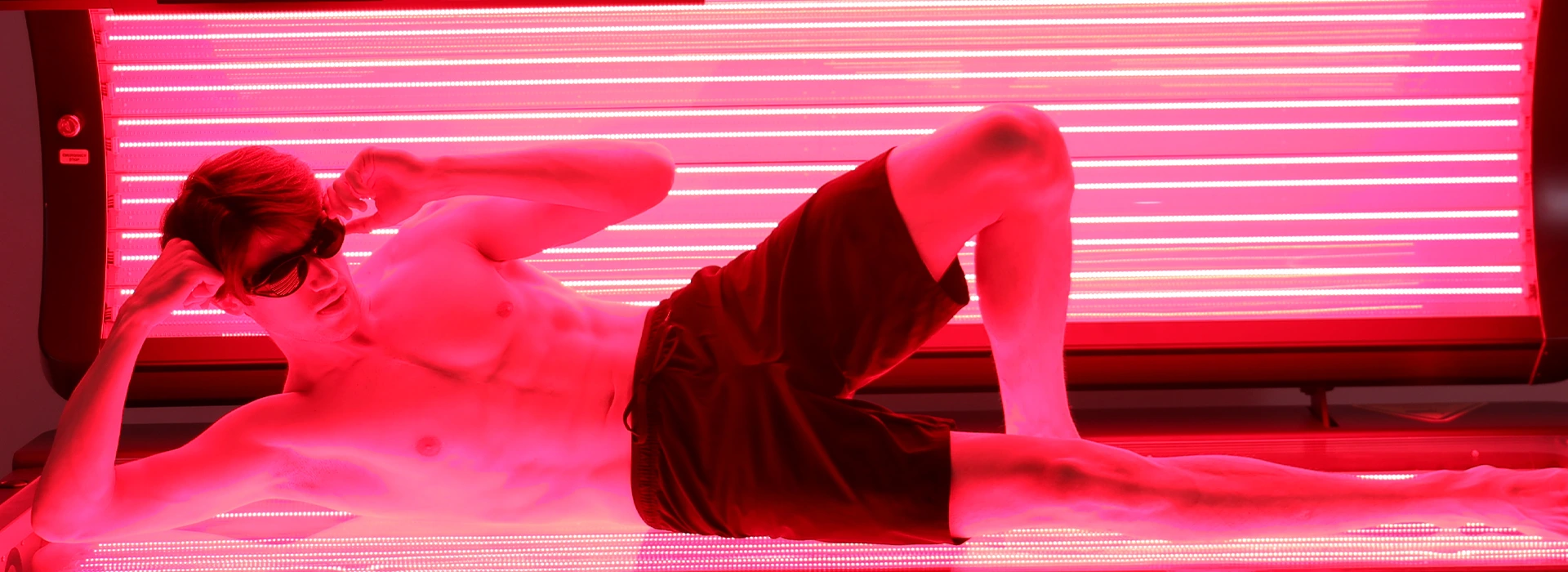
For seasoned athletes and professionals managing high-intensity training loads, recovery is not a passive process; it is a calculated, strategic component of performance enhancement. As training protocols push the metabolic and mechanical limits of the human body, the search for non-invasive, quantifiable methods to accelerate cellular regeneration is paramount. One such method, Photobiomodulation (PBM), or red light therapy for athletes, has moved from fringe wellness trend to a validated tool in the arsenal of top sports organizations.
This analysis is geared toward the experienced practitioner, exploring the underlying biological mechanisms of PBM and detailing how advanced, high-irradiance systems—such as those engineered by Magique Power—are designed to meet the rigorous demands of professional sports recovery environments.
The Quantum Mechanism of Muscle Regeneration
The efficacy of red light therapy in promoting muscle recovery is rooted in its interaction with the cellular powerhouse: the mitochondria. This is not simply about surface-level heat or tissue relaxation; it is a deep, biochemical process:
1.Cytochrome c Oxidase (CCO) Absorption: Specific wavelengths of red light (600–700 nm) and near-infrared (NIR) light (700–1000 nm) are absorbed by a key photoacceptor located within the mitochondrial membrane: Cytochrome c Oxidase (CCO), which is subunit IV of the electron transport chain (ETC).
2.Nitric Oxide Dissociation: Under metabolic stress (such as intense training), nitric oxide (NO) binds competitively to CCO, temporarily inhibiting oxygen consumption and slowing down ATP production. The energy delivered by PBM photons acts to photodissociate this inhibitory NO from the CCO binding site.
3.ATP Synthesis Spike: Once the NO block is cleared, oxygen uptake increases dramatically, accelerating the flow of electrons through the ETC. The result is a surge in Adenosine Triphosphate (ATP) synthesis, the fundamental energy source required for cellular repair, protein synthesis, and detoxification.
This mitochondrial stimulation translates directly to enhanced physiological outcomes: reduced oxidative stress, expedited clearance of metabolic waste, and a significant attenuation of the inflammatory cascade necessary for recovery.
Red Light Therapy for Athletes: Quantifiable Performance Gains
While general wellness applications often focus on subjective improvements, the value of PBM for athletes lies in its ability to influence measurable markers of recovery and performance:
- Reduction in Delayed Onset Muscle Soreness (DOMS):Studies show that PBM application, particularly when administered pre-exercise (pre-conditioning) or immediately post-exercise, can substantially reduce perceived muscle soreness scores (VAS), thereby improving athlete comfort and adherence to subsequent training sessions.
- Attenuation of Muscle Damage Markers:PBM helps lower systemic markers associated with tissue breakdown, such as Creatine Kinase (CK) and Lactate Dehydrogenase (LDH), signaling a reduction in overall exercise-induced muscle damage (EIMD).
- Improved Endurance and Strength Recovery:By increasing ATP availability, PBM supports sustained performance. Research suggests that it can enhance resistance to fatigue and accelerate the return of peak muscle force capacity in the 24 to 72 hours following a strenuous effort. This is a critical factor for athletes operating on tight competition schedules or high-volume training blocks.
The consensus is that while PBM is not a silver bullet, it serves as a powerful adjunctive therapy—especially when the device delivers the appropriate, high-irradiance dose that can penetrate deep muscle tissue effectively.
Integrating Advanced PBM: The Magique Power Diamond Therapy Pod
For organizations serious about leveraging PBM, the therapeutic system must deliver precision, power, and comprehensive body coverage. This is where specialized commercial-grade systems, such as the Magique Power Diamond Bed, excel beyond standard consumer panels. This equipment moves beyond simple handheld devices, offering a full-spectrum, high-irradiance environment.
When selecting a high-end system like the red light therapy pod, key decision criteria center on power, uniformity, and control. The professional-grade engineering is designed to deliver a therapeutic dose across the entire musculoskeletal system simultaneously, maximizing recovery efficiency in a single, short session.
Precision Engineering: Specifications of the Magique Power Diamond Bed
The efficacy of PBM is acutely dose-dependent. The high specification of the Diamond Appearance Near-Red Light Therapy Bed ensures the irradiance required for deep muscle penetration, a necessity for treating the large muscle groups of elite athletes:
Feature | Specification | Therapeutic Relevance for Athletes |
Total LED Count | 43,200 pcs (Taiwan Epistar) | Ensures complete, uniform coverage and consistent photonic density across the entire body surface. |
Machine Power | 6000 Watts (Max) | High power enables the bed to generate the necessary high irradiance for deep tissue saturation. |
True Irradiance | 129 mW/cm² | This high, confirmed output is crucial for achieving effective therapeutic dosages in muscle tissue, which requires significantly higher power density than skin treatment. |
Wavelength Spectrum | Red: 633nm, 660nm; NIR: 810nm, 850nm, 940nm (Customizable) | Multi-wavelength capability ensures both superficial (Red) and deep (NIR, especially 810nm and 850nm) tissue targets are addressed, maximizing mitochondrial response. |
Pulsing Frequency | 1–10,000 Hz | Allows for precise control over treatment parameters, enabling practitioners to select specific frequencies known to optimize cellular signaling pathways for injury repair or inflammation reduction. |
Structure | 360° full-body application | Facilitates simultaneous treatment of anterior and posterior muscle groups, drastically reducing treatment time and ensuring symmetrical recovery. |
LED Lifespan | 100,000 hours | Provides long-term reliability and low operational expenditure, essential for high-volume commercial use. |
The integration of 810nm, 850nm, and 940nm NIR wavelengths is particularly critical for muscular recovery, as these longer wavelengths penetrate the deepest into soft tissue, ensuring the PBM effect reaches the skeletal muscle fibers and associated deep-lying mitochondria.
Conclusion and Future Protocol Design
The experienced customer understands that the inconsistent results sometimes cited in PBM literature often stem from suboptimal dosing, device variability, or insufficient power output—issues that high-end equipment like the Magique Power red light therapy pod are engineered to mitigate.
When deploying a PBM strategy for muscle recovery, the goal is to systematically reduce inflammation and accelerate ATP turnover to shorten the necessary recovery window. For the professional environment, adopting a system with 43,200 high-output LEDs and 6000W of power ensures the critical irradiance levels are consistently delivered.
PBM is not a replacement for fundamental recovery pillars, but when combined with smart training, nutrition, and sleep, a high-performance system can provide the measurable edge that defines elite performance. Consult with your team to integrate these specific parameters into your athlete’s next recovery protocol.
