

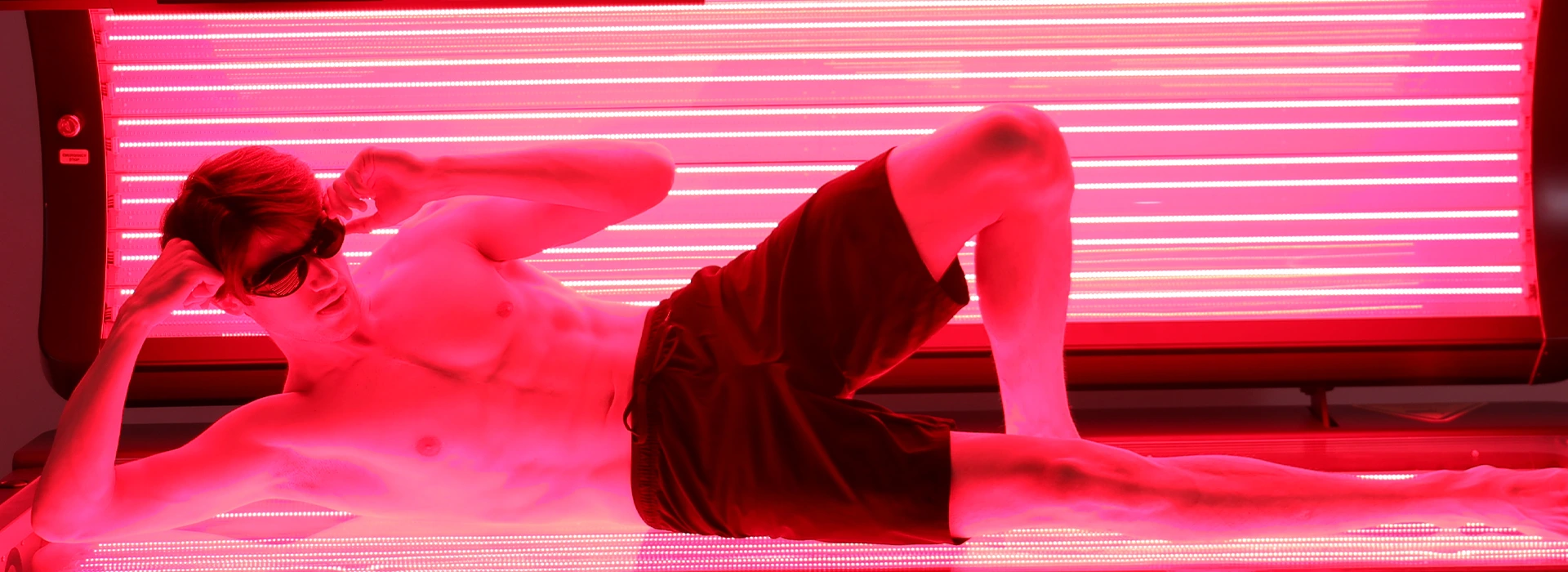
For seasoned professionals in health, wellness, and therapeutic practices, the efficacy of any new modality must be grounded in robust cellular science and clinical validation. Photobiomodulation (PBM) therapy, commonly known as Red Light Therapy (RLT), has transcended its initial reputation as a purely cosmetic treatment. It is now a recognized, non-invasive adjunctive therapy for managing a spectrum of acute and chronic pain conditions.
The question, does red light therapy work for pain relief, can be answered definitively: yes, when delivered with clinical-grade equipment and appropriate dosing, the science supports its use for pain and inflammation management. This analysis delves into the mechanisms, the required delivery precision, and the critical role of advanced PBM systems in achieving these therapeutic outcomes.
The Cellular Mechanisms of Pain Modulation
To understand PBM’s effect on pain, we must look beyond the skin surface and into the cellular powerhouse: the mitochondria.
The primary mechanism involves the absorption of photons (light particles) by specific photoreceptors within the mitochondria, mainly Cytochrome C Oxidase (CCO). When CCO absorbs red (600-700 nm) and near-infrared (NIR, 770-1200 nm) light, it triggers a cascade of biochemical reactions:
1.ATP Production: Enhanced mitochondrial CCO activity accelerates the cellular respiratory chain, resulting in increased Adenosine Triphosphate (ATP) synthesis. This surge in cellular energy fuels the repair and regeneration processes required for tissue healing and reduced recovery time.
2.Nitric Oxide (NO) Release: Light absorption helps dissociate inhibitory Nitric Oxide (NO) from CCO. This NO release improves local microcirculation and vasodilation, increasing the delivery of oxygen and nutrients while aiding in the removal of pain-inducing metabolic waste.
3.Inflammation and Cytokine Modulation: PBM significantly downregulates pro-inflammatory cytokines—specifically Tumor Necrosis Factor-alpha (TNF-alpha) and various interleukins (IL-6, IL-1beta)—which are key drivers of chronic pain and systemic inflammation. By attenuating these mediators, PBM effectively reduces neurogenic inflammation and central sensitization, offering sustained relief rather than mere masking of symptoms.
This multi-faceted cellular action explains why PBM is effective for conditions ranging from musculoskeletal soreness (tendinopathy, muscle strain) to complex systemic pain disorders like fibromyalgia and chronic neuropathy.
Leveraging a Professional Red Light Therapy Chamber for Systemic Results
For localized pain, targeted panels may suffice. However, for chronic, widespread, or deep-seated conditions that involve systemic inflammation (such as chronic back pain, fibromyalgia, or post-surgical recovery), whole-body PBM is superior.
Clinical studies indicate that whole-body PBM delivers greater and more sustained pain reduction than localized applications. This is attributed to the systemic modulation of nociceptive pathways and the autonomic nervous system, leading to widespread anti-inflammatory effects and improved sleep and mood—co-morbidities often associated with chronic pain.
Achieving this systemic relief requires precision equipment that guarantees uniform dose delivery across the entire body. Three critical factors determine therapeutic success:
1.Wavelength Penetration: NIR light, particularly in the 810 nm to 940 nm range, is essential as it penetrates deeper into joints, fascia, and muscle tissue than red light alone.
2.Irradiance: Low-power devices may be suitable for superficial skin issues, but deep pain and inflammation require high, uniform irradiance (measured in mW/cm²) to ensure the required energy (J/cm²) is delivered to deep tissues within a clinically viable treatment window.
3.Coverage: A true red light therapy chamber must offer 360-degree coverage to ensure light reaches all areas simultaneously, eliminating the need for complex repositioning and maximizing efficiency for business operations.
Magique Power: Precision Dosing for Clinical Outcomes
For professional practices, investing in equipment that meets medical-grade manufacturing standards is non-negotiable for patient safety and efficacy. Magique Power, a global OEM/ODM manufacturer, specializes in professional-grade light therapy devices built to ISO 13485 standards.
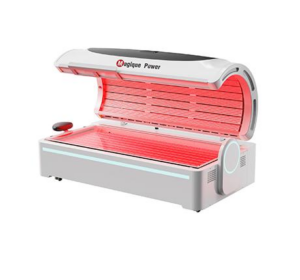
The Magique Power Professional LED Light Therapy Bed is engineered specifically for high-efficacy, full-body treatment protocols, including dedicated programs for pain management. The technical specifications of this red light therapy chamber are critical to its performance:
- Massive LED Array:The unit utilizes 43,200 Taiwan Epistar LEDs, ensuring maximum, consistent coverage across the entire 360° inner surface.
- Precision Wavelengths:It deploys five independent wavelengths—Red (633nm, 660nm) and NIR (810nm, 850nm, 940nm). This combination is optimal, using red light for superficial anti-inflammatory effects and the deeper penetrating NIR wavelengths (up to 940nm) to target muscle, bone, and neural tissue.
- Clinical Irradiance:With a total machine power of 6000 W and an irradiance of 129 mW/cm², the device delivers the high power density required for effective tissue saturation and therapeutic dosing in minimal time.
- Intelligent Features:The system includes five pre-set programs, notably a dedicated “Pain Relief” mode, and customizable pulsing frequencies (1-10,000 Hz) that allow practitioners to optimize protocols based on specific clinical needs, enhancing patient acceptance and results.
By integrating this precise technology, Magique Power provides a robust, evidence-backed solution that moves beyond the claims of consumer devices, allowing experienced practitioners to offer a consistently effective modality for managing the complex challenge of pain relief. Investing in this caliber of equipment ensures both superior patient outcomes and a high ROI for your professional practice.
