

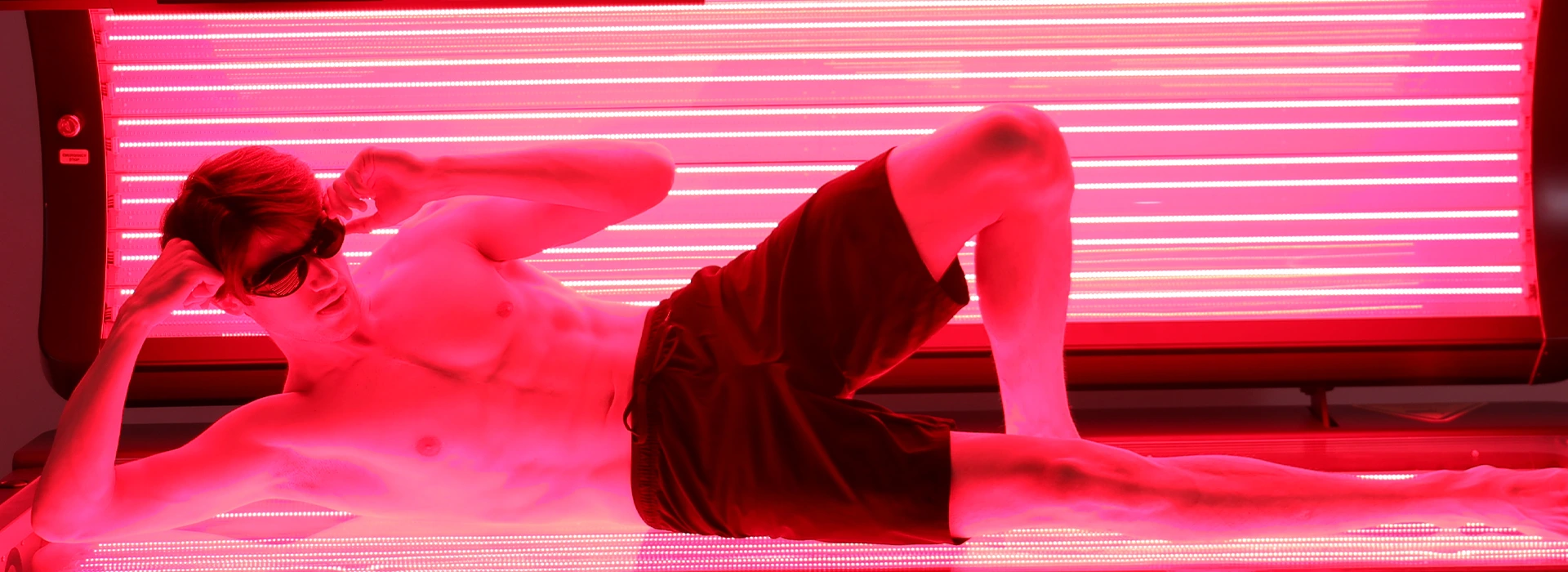
Red light therapy beds have rapidly evolved from niche recovery facilities into mainstream wellness, beauty, and fitness markets. According to Grand View Research, beds and pods accounted for the largest product segment, representing 39.9% of the global red light therapy market in 2025, while cosmetic applications held the largest application share at 59.5% of total market revenue. Growth like that pulls in new buyers every month — wellness studio owners, spa operators, biohackers, and wholesale distributors alike.
But rapid growth also spreads rumors faster than facts. Many buyers still shop by gut feeling: hotter must mean stronger, bigger must mean better, longer must mean deeper results. None of that holds up under the actual science of photobiomodulation (PBM), the technical term for red and near-infrared (NIR) light therapy.
This guide breaks down five of the most common misconceptions so B2B buyers, clinics, and serious home users can make a purchase decision based on data instead of guesswork.
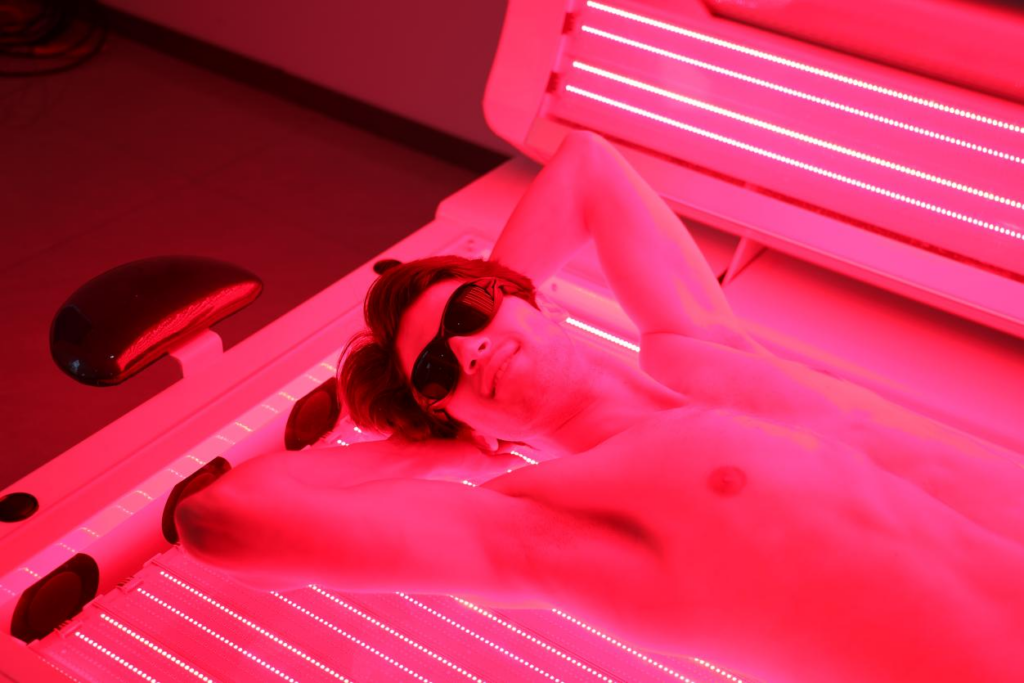
Table of Contents
ToggleDoes a Hotter Red Light Therapy Bed Deliver Better Results?
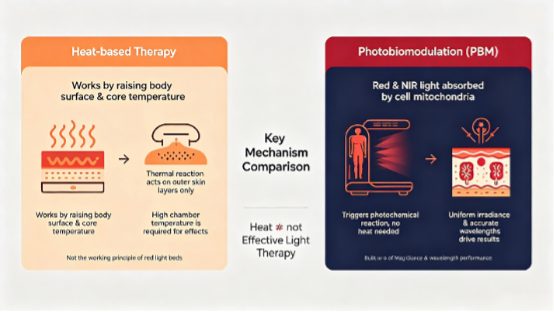
No. Heat is not what makes red light therapy work, and a warmer chamber does not mean stronger treatment. PBM triggers a photochemical reaction, not a thermal one.
Why Doesn't Red Light Therapy Rely on Heat?
Red and near-infrared light is absorbed by cytochrome c oxidase, an enzyme inside the mitochondria. This interaction helps stimulate ATP production and downstream cellular signaling associated with tissue repair and modulation of inflammatory responses, rather than generating therapeutic effects through heat.
A peer-reviewed review published in PMC (National Institutes of Health) confirms that photobiomodulation works through photochemical rather than thermal mechanisms. This is why red light therapy differs fundamentally from infrared saunas, which rely on raising body temperature to produce their primary effects.
How to Evaluate a Red Light Therapy Bed: What Specs Actually Matter?
Instead of chamber temperature, buyers should evaluate:
- Irradiance (measured in mW/cm²) at the treatment surface
- Wavelength accuracy, since even a few nanometers off-target changes tissue penetration
- Light uniformity across the whole treatment area, not just the center
- LED lifespan and decay rate, which determine whether output stays consistent over years of use
Do Bigger Red Light Therapy Beds Automatically Work Better?
Not automatically. Size determines how much of the body a session can reach, but it says nothing about whether the light actually reaches deep enough or stays consistent across that surface.
How Does Size Relate to Treatment Coverage?
A larger chamber can cover more skin per session, which matters for anyone treating the whole body rather than one joint or one patch of skin. But a large surface with weak or uneven LED density simply spreads a mediocre dose over more area — it does not intensify it.
Full-Body Treatment vs. Targeted Treatment
Factor | Full-Body Red Light Therapy | Targeted Panel/Handheld |
Session goal | Whole-body recovery, skin, circulation | One joint, one muscle, one skin patch |
Client throughput | Higher — one session treats everything | Lower — separate sessions per area |
Best fit | Clinics, spas, recovery centers | Home spot-treatment, budget entry |
Why Better Specs Deliver Better Results Than a Bigger Bed?
What actually determines results is the combination of irradiance, wavelength range, and cooling stability sustained across the entire surface — not the square footage of the bed.
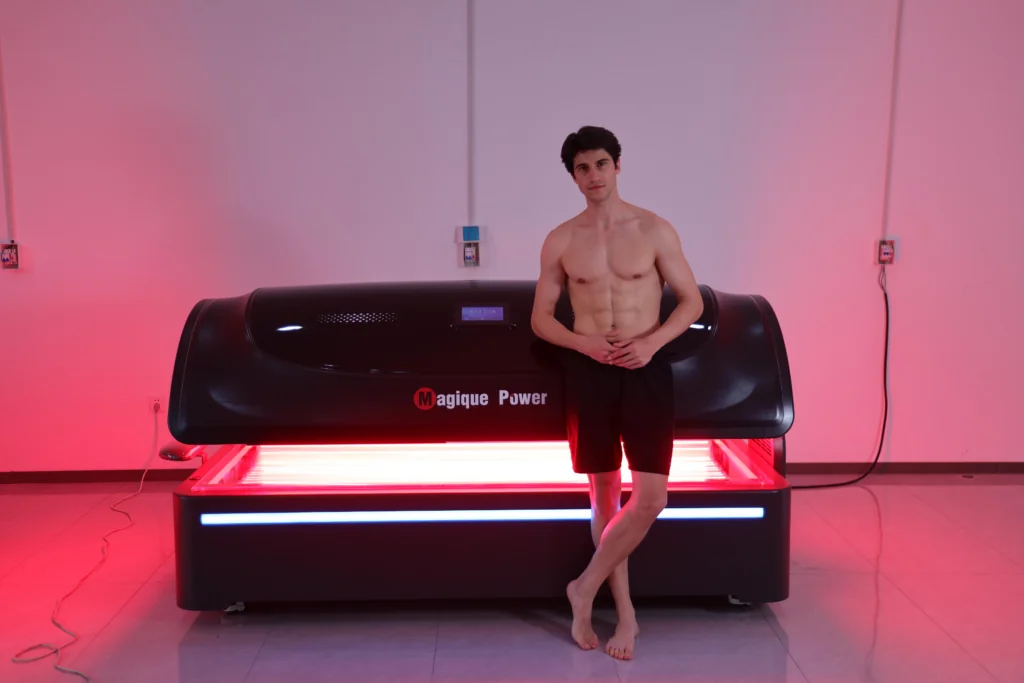
For example, Magique Power’s red light bed pairs a full-body chamber with 43,200 Epistar LEDs and a self-circulating cooling system built around 32 fans, engineered to deliver consistent irradiance across the entire treatment surface. That is the difference between ordinary large beds and professional units that perform evenly at scale.
Are All Red-Light Therapy Beds the Same?
No. Red light therapy equipment fall into several distinct categories, and confusing is one of the costliest mistakes a buyer can make.
What Types of Red Light Therapy Devices Exist Today?
- Full-body beds/pods — 360°chambers designed for whole-body sessions, commonly found in clinics, spas, and recovery centers.
*Note: For brands and distributors, these commercial beds are often available for OEM/ODM customization, allowing for bespoke wavelength mixes, custom branding, and proprietary software.
- Panels — wall- or stand-mounted units for targeted or linked full-body use, lower capital cost
- Handheld and wearable devices — small-area, consumer-focused, lowest output
What Should Buyers Compare Before Choosing?
Beyond category, buyers should compare irradiance, wavelength count, preset programs, certification (FDA, CE, RoHS, UL), and after-sales support. Two beds that look identical in a photo can differ enormously once these specs are checked line by line.
How Does Magique Power's Full-Body Bed Fit In?
A premium red light therapy solution should offer more than just baseline specs. As a commercial-grade manufacturer, Magique Power designs high-performance light therapy equipment engineered for heavy clinical and professional use, providing versatile options across different device types:
- Commercial Full-Body Beds: For clinics and spas maximizing throughput, Magique Power’s flagship red light therapy bed delivers up to 6,000W of total output and 129 mW/cm2 irradiance . It combines comprehensive 360°coverage with 43,200 Epistar LEDs and a 5-wavelength configuration (633nm, 660nm, 810nm, 850nm, and 940nm).
- Professional Target Panels: For environments requiring a modular setup or a lower capital entry point, their high-irradiance panels offer the same medical-grade wavelength accuracy in a more flexible footprint.
Every piece of equipment in the lineup is manufactured under ISO 13485 medical-grade quality standards and fully complies with FDA, CE, RoHS, and UL safety regulations. Backed by a 100,000-hour LED lifespan, a 5-year warranty, and lifetime LED chip support, Magique Power focuses on brand reliability over short-term hype.
Whether you are looking to browse their full product lineup to find the right fit for your facility, or require professional OEM/ODM manufacturing services for a custom wavelength mix, private logo, and software interface, Magique Power streamlines your procurement process.
Does a Longer Red Light Therapy Treatment Time Produce Better Results?
No. Beyond a certain point, adding minutes does not add benefit, and it can even work against the user.
How Does Session Length Affect Results?
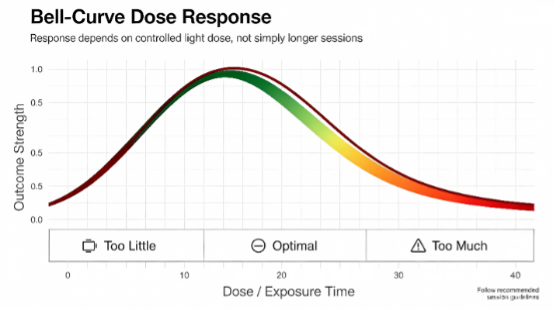
Photobiomodulation follows a biphasic dose-response, formally known as the Arndt-Schulz Law. A peer-reviewed review indexed on PubMed explains that lower light doses tend to stimulate and repair tissue more effectively than higher doses, and that pushing past the effective dose can blunt or even reverse the benefit rather than amplify it.
Why Does Consistency Beat Marathon Sessions?
Because the dose curve tops out, a shorter session repeated on a regular schedule generally produces better long-term outcomes than one long, occasional session. Skipping days and then over-compensating with a 45-minute session does not make up for lost consistency — it just risks pushing past the effective dose window.
What Factors Set the Right Red Light Therapy Treatment Time?
- Irradiance output of the specific device
- Distance between the light source and the skin
- Wavelength depth (red light stays shallow; near-infrared reaches deeper tissue)
- The treatment goal — skin rejuvenation, muscle recovery, or pain relief each call for different timing
Can Red Light Therapy Beds Only Be Used in Clinics?
No, though clinics remain where the technology built its reputation. Clinical red light therapy beds set the safety and consistency standards the rest of the market now follows.
Where Did Clinical Red Light Therapy Beds Start?
Photobiomodulation devices first gained traction in physiotherapy, dermatology, and pain-management clinics, where practitioners relied on equipment designed to meet applicable regulatory and quality standards, including FDA registration and CE certification where applicable. That clinical track record is still why hospitals and rehab centers trust the technology today.
Where Did Clinical Red Light Therapy Beds Start?
The same underlying science now serves wellness studios, beauty spas, fitness recovery rooms, and increasingly, serious home users and biohackers. Manufacturing improvements brought costs down and made full-body systems practical outside a hospital setting, without lowering the certification bar for the equipment itself.
Which Environment Fits Which Device?
Setting | Typical Priority | Best-Fit Device |
Medical/clinical | Precision dosing, compliance documentation | Clinical-grade full-body bed |
Wellness studio/spa | Client throughput, premium positioning | Full-body bed or linked panels |
Fitness/recovery center | Fast turnaround between clients | Full-body bed, multi-unit setup |
Home/biohacker | Personal use, lower footprint | Panel or targeted device |
Buyers should match the environment to the device rather than assuming one category serves every setting equally well.
Conclusion
Across these five misconceptions, the core message remains the same: performance claims—whether about heat, chamber size, or treatment length—must always be backed by verifiable data. For any professional investment, the smartest decision is rooted in consistent irradiance, precise wavelength accuracy, and medical-grade certifications.
As a dedicated commercial manufacturer, Magique Power addresses these critical needs by moving away from industry myths and focusing on true engineering. From high-output, 5-wavelength full-body beds with advanced cooling systems to flexible, medical-grade target panels, their equipment is built to deliver predictable, repeatable results at scale.
Don’t let marketing myths dictate your equipment choices. To review real specifications, request a custom quote, or discuss how our light therapy solutions can integrate into your facility, contact us today for a wholesale consultation.
- Grand View Research — “Red Light Therapy Market Size, Growth Report, 2026–2033.” https://www.grandviewresearch.com/industry-analysis/red-light-therapy-market-report
- Peer-reviewed review, PMC (National Institutes of Health) — “The Mechanisms and Efficacy of Photobiomodulation Therapy for Arthritis: A Comprehensive Review.” https://pmc.ncbi.nlm.nih.gov/articles/PMC10531845/
- Huang, Y.-Y. et al. — “Biphasic Dose Response in Low Level Light Therapy – An Update,” PubMed. https://pubmed.ncbi.nlm.nih.gov/22461763/
