

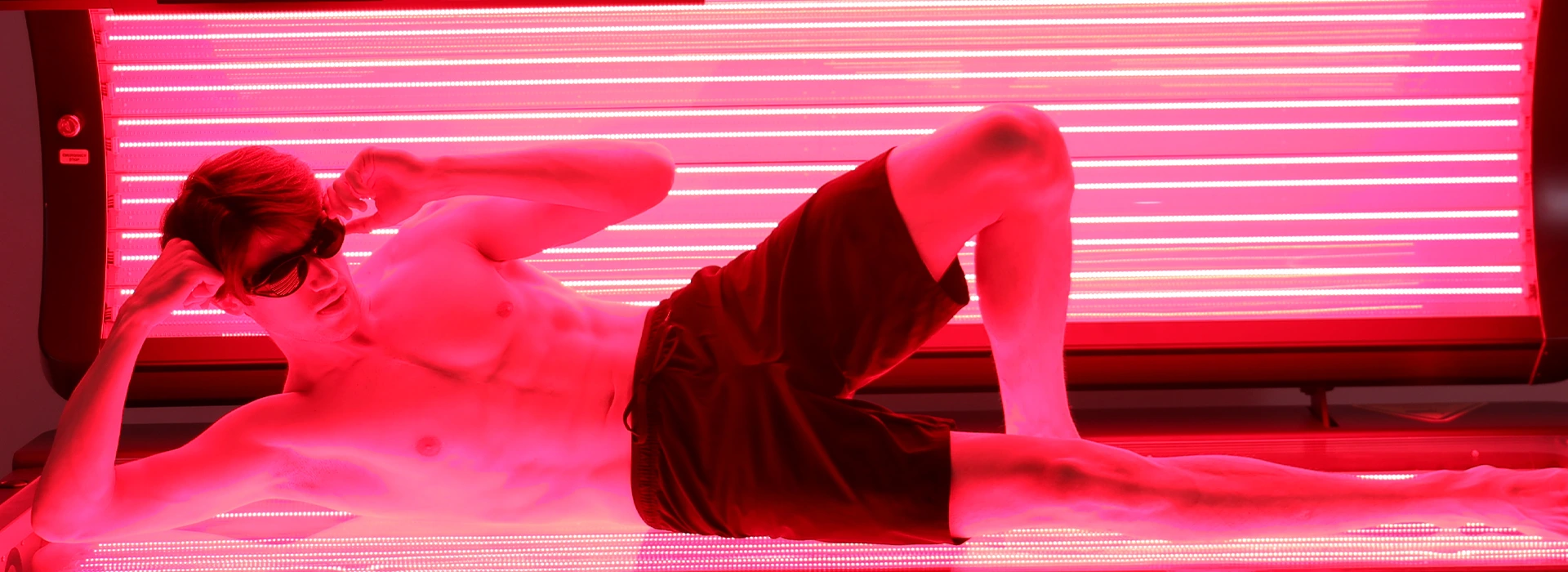
Unlike tanning beds, a red light therapy bed uses red and near-infrared light rather than ultraviolet (UV) radiation. Users still expose skin and eyes to light, so settings, eye protection, and screening matter.
Some buyers ask, “Are red light tanning beds safe?” Red light beds are not designed to tan skin, but safety still depends on the device, session length, and user conditions.
The following red light therapy tips help professional facilities create a safer service procedure.
Table of Contents
ToggleUnderstand the Safety Tip 1—Use a Device with Clearly Defined Specifications
Safe use begins with knowing exactly what the device is designed to deliver. A commercial red light bed should provide a clear model number, operating manual, intended use, and technical specifications that staff can follow during every session.
- Check the essential specifications: Review the listed wavelengths, irradiance, treatment coverage, timer range, cooling system, electrical requirements, and supplied eye protection. LED quantity or a high wattage figure alone does not explain how the device should be used.
- Match the protocol to the specific device: The manual should explain how to use red light bed equipment, including client position, treatment distance, operating mode, and required accessories. Do not copy a protocol from a panel or another brand’s bed.
- Confirm applicable documentation: Check whether the exact model has FDA clearance, FDA registration and device listing, or other market-specific documentation. These terms are not interchangeable, and FDA registration or device listing does not by itself mean FDA clearance or approval.
These red light therapy tips give staff a defined operating basis before they set treatment time or begin a session.
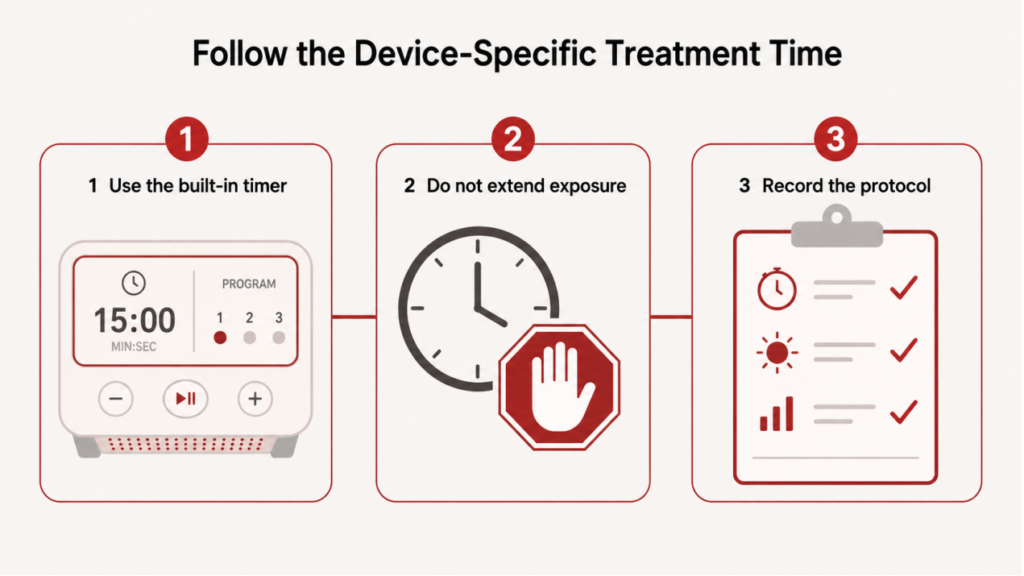
Understand the Safety Tip 2—Follow the Device-Specific Treatment Time
Session time should follow the device manual and selected program, not a generic schedule from another bed or panel.
- Use the built-in timer: Keep the recommended time, distance, position, and operating mode consistent throughout the session.
- Do not extend exposure: Follow the session limit for the selected device and program. Treatment time varies by device, so a client’s lack of an immediate visible change is not a reason to prolong exposure.
- Record the protocol: In a staff-operated service, document settings and session length so every operator knows how to use red light bed equipment consistently.
These red light therapy tips keep exposure within a planned range rather than making each appointment an experiment.
Understand the Safety Tip 3—Protect the Eyes According to the Device Instructions
Eye protection needs its own routine. Red and near-infrared light are not UV, but direct LED viewing is still inappropriate.
- Use specified protection: Provide the goggles or other eye protection named in the instructions, and check the fit before every session.
- Do not substitute sunglasses: The FDA notes that light-based procedures can injure eyes. Ordinary sunglasses are not a replacement for the protection recommended for the device.
- Remove damaged goggles: Scratched, loose, or damaged accessories should be replaced, and clients should keep protection on throughout treatment.
Among practical red light therapy tips, eye protection should remain mandatory, including for brief sessions.
Understand the Safety Tip 4—Check Medications, Supplements, and Skincare Products
A red light bed may not be suitable for every client at every appointment. A short pre-treatment check helps the facility identify when a client should seek medical advice instead of proceeding with a standard session.
- Ask about medicines and supplements: Clients should disclose prescription medicines, over-the-counter drugs, vitamins, supplements, and topical skincare products. Review the product labels and device instructions for photosensitivity warnings.
- Identify possible light-sensitivity risks: Some medicines and health conditions can increase sensitivity to light. If a client has a photosensitivity disorder, a relevant condition, or uncertainty about an active ingredient, advise them to consult a physician or dermatologist before treatment.
- Keep professional roles clear: Staff can complete an intake check and follow the device protocol, but should not determine whether a medicine is compatible with photobiomodulation. The FDA lists photosensitizing medication as a situation in which photobiomodulation may not be appropriate.
These red light therapy tips help facilities screen clients responsibly without turning a beauty or wellness service into medical decision-making.
Understand the Safety Tip 5—Clean and Maintain the Equipment
Safety also depends on the condition of the equipment. Worn accessories, blocked vents, or damaged cables can compromise an otherwise correctly specified device.
- Clean between users: Use the manufacturer-approved method for client-contact and high-touch surfaces. Switch off and disconnect the bed when instructed, and never spray liquid into vents, LED assemblies, or controls.
- Inspect key parts: Check goggles, cables, fans, LEDs, timers, and emergency controls. Stop use and arrange service if there is damage, unusual heat, loose wiring, flickering, or irregular operation.
Routine care is part of how to use red light bed equipment safely and keeps red light therapy tips within daily equipment management, rather than only at setup.
Understand the Safety Tip 6—Choose the Manufacturers with Qualification
For facilities applying red light therapy tips, a safer red light bed service also depends on the supplier behind the equipment. Before purchase, clinics, spas, and wellness centers should verify how a manufacturer documents product specifications, controls production quality, and supports the device after installation.
- Review model-specific information: The supplier should provide clear manuals, technical specifications, installation requirements, maintenance guidance, and warranty terms for the exact model being purchased.
- Check quality and compliance evidence: Review the quality-management process and ask which certificates, registrations, test reports, and market documents apply to the destination country and intended product use.
- Evaluate long-term support: Technical assistance, replacement-part availability, maintenance guidance, and responsive after-sales service are all relevant to safe commercial operation. When buyers ask, “Are red light tanning beds safe,” supplier capability is part of the answer.
Magique Power’s Manufacturing Capability
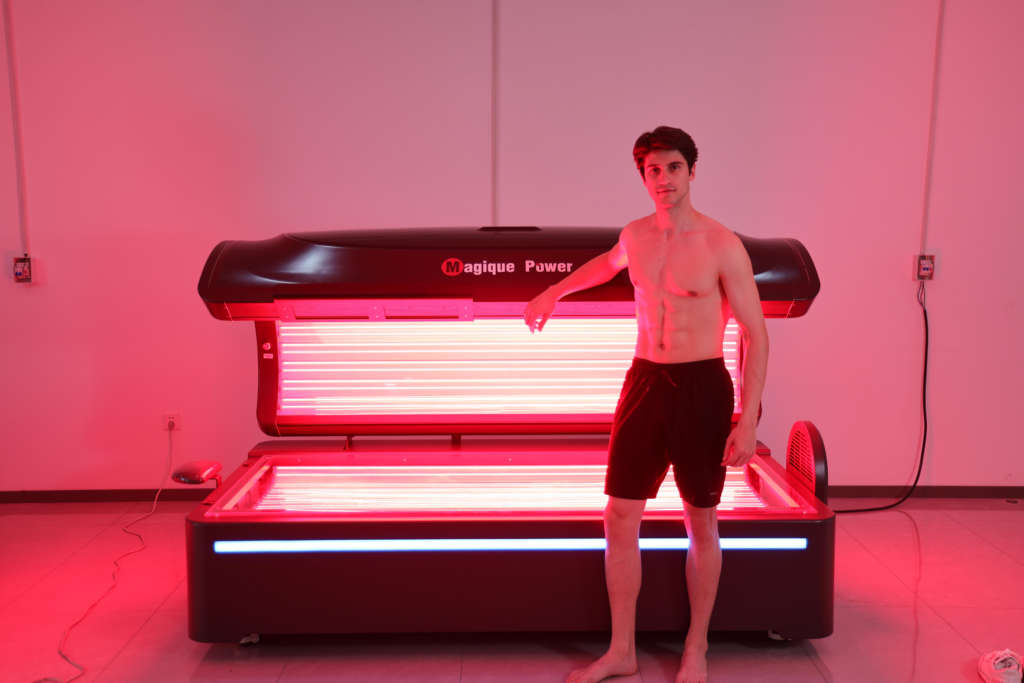
Magique Power manufactures red light therapy panels and full-body beds for professional buyers, with OEM and ODM services available.
For clinics, wellness centers, and spas, supplier selection depends not only on device specifications, but also on manufacturing controls, documentation, and post-delivery support.
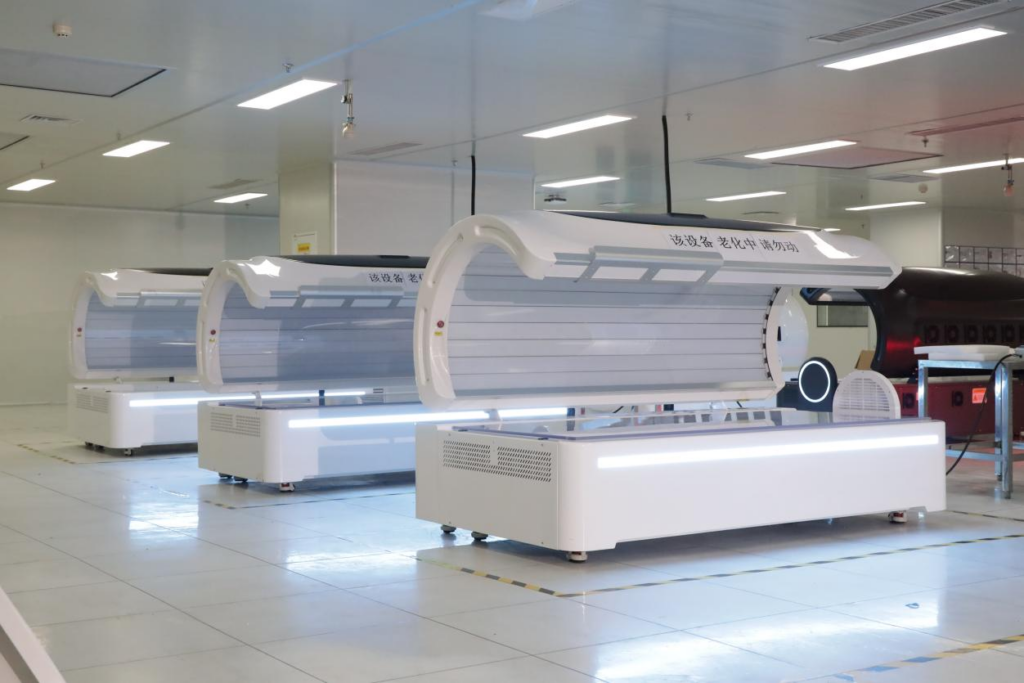
1. Configuration and production preparation
2. Quality control from assembly to shipment
- Before assembly: Magique Power checks incoming components, including LED chips, power modules, and control systems.
- During production: Magique Power controls PCB assembly, LED positioning, electrical connections, temperature management, and spectral output. Automated optical inspection is used for assembled circuit boards.
- Before shipment: Magique Power performs final appearance, functionality, and performance inspections before packaging the device with relevant user manuals and guides.
These manufacturing and support capabilities give professional facilities a clearer equipment foundation for applying red light therapy tips consistently.
Conclusion
For facilities asking “are red light tanning beds safe,” red light beds avoid UV tanning radiation but still require controlled use.
Following these red light therapy tips on specifications, treatment time, eye protection, screening, and maintenance helps professional facilities deliver more consistent sessions.
Explore Magique Power’s red light panels and full-body beds for your clinic or wellness space.
References
- S. Food and Drug Administration. Tanning.
https://www.fda.gov/radiation-emitting-products/radiation-emitting-products-and-procedures/tanning - American Academy of Dermatology. Is Red Light Therapy Right for Your Skin?
https://www.aad.org/public/cosmetic/safety/red-light-therapy - S. Food and Drug Administration. Non-Invasive Body Contouring Technologies.
https://www.fda.gov/medical-devices/aesthetic-cosmetic-devices/non-invasive-body-contouring-technologies - S. Food and Drug Administration. Are There “FDA Registered” or “FDA Certified” Medical Devices? How Do I Know What Is FDA Approved?
https://www.fda.gov/medical-devices/consumers-medical-devices/are-there-fda-registered-or-fda-certified-medical-devices-how-do-i-know-what-fda-approved
